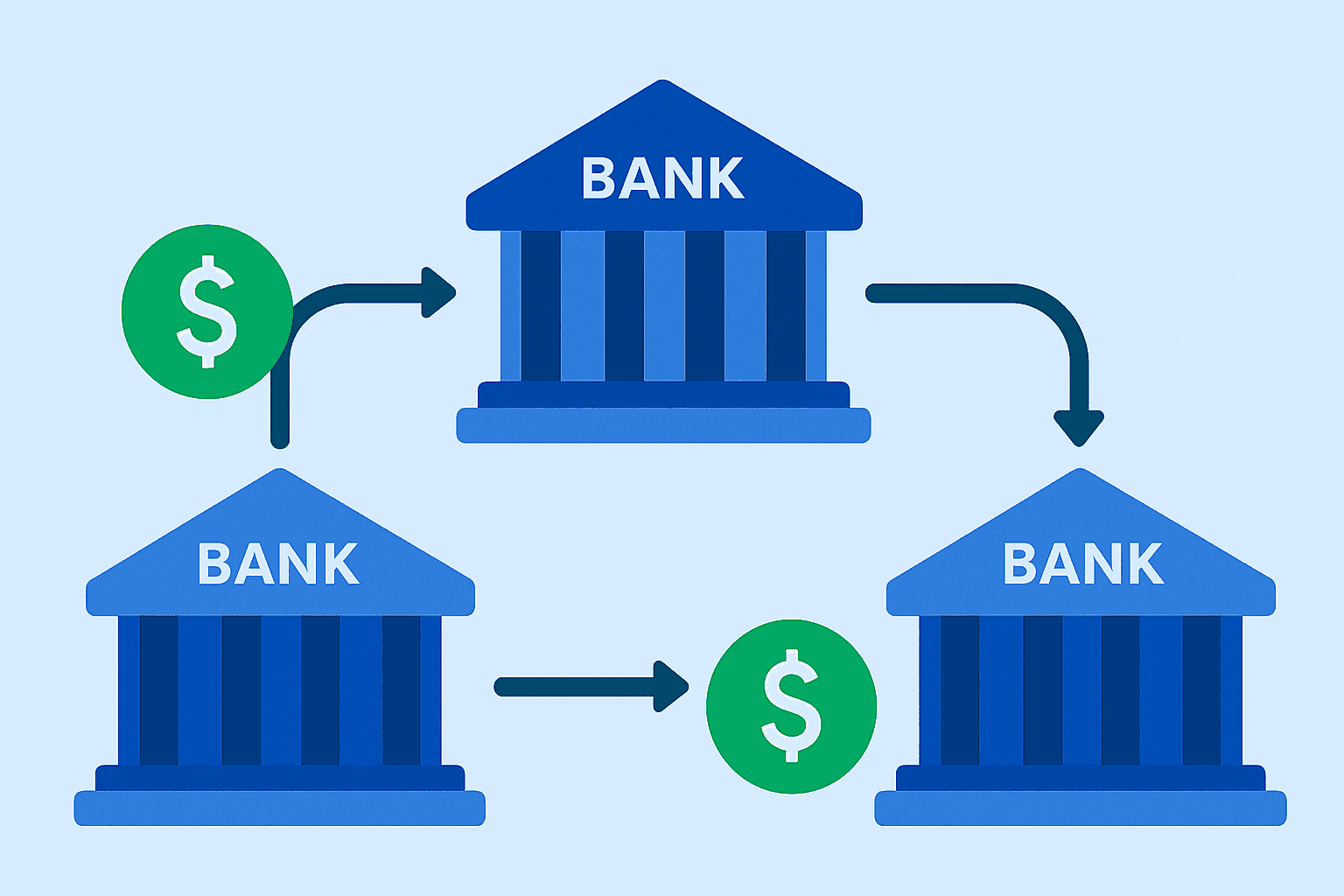
Are the IFSC and SWIFT code the same? What you need to know

IFSC is for India, SWIFT is international. Skydo skips SWIFT with local accounts in major currencies.
TL;DR
- No, IFSC and SWIFT are not the same.
- IFSC (Indian Financial System Code) is an 11-character code used only for domestic transfers within India (NEFT, RTGS, IMPS).
- SWIFT (also called BIC) is an 8 or 11-character code used for cross-border/international transfers between banks worldwide.
- Think of IFSC as a local pin code for an Indian bank branch, and SWIFT as an international address that tells the global network which bank (and sometimes which branch) to route money to.
- For domestic transfers → you need IFSC. For international transfers → the sender’s bank usually needs SWIFT + your account number (and sometimes IFSC as an extra field for India).
Whether you’re sending money back home or paying a remote employee, you’ll need either an IFSC code or a SWIFT code based on where you’re transferring the funds. Both codes ensure a secure and standardised way to transfer money between accounts, but they’re NOT the same. Let's break down the key differences between SWIFT and IFSC codes.
Difference between SWIFT Code and IFSC Code: Explained
- SWIFT stands for Society for Worldwide Interbank Financial Telecommunication and SWIFT code is used to identify banks and other financial institutions internationally. Various countries across the globe are part of SWIFT. IFSC on the other hand, stands for Indian Financial System Code and it is instrumental in identifying bank branches within India.
- A SWIFT code is required for international financial transactions, facilitating communication between banks across countries. An IFSC code, on the other hand, is used for domestic transactions, enabling interbank transfers within India.
- SWIFT code is an 8-11 digit alphanumeric code while IFSC code is an 11 digit alphanumeric code.
- The SWIFT code is issued and managed by the Society for Worldwide Interbank Financial Telecommunication (SWIFT) network. In contrast, the IFSC code is regulated by the Reserve Bank of India (RBI) and is part of the NEFT (National Electronic Fund Transfer) system.
| SWIFT Code | IFSC Code | |
| Function | Used to identify banks and other financial institutions internationally | Instrumental in identifying bank branches within India. |
| Type of transaction | Required for international trade and international transactions. | Used for domestic transfers |
| Length of the code | 8-11 digit alphanumeric code | 11 digit alphanumeric code |
| Managed by | Managed by the Society for Worldwide Interbank Financial Telecommunication (SWIFT) network. | Managed by the Reserve Bank of India (RBI) and is part of the NEFT (National Electronic Funds Transfer) system. |

Payment Instructions Card
- ✓ Different codes per client?
- ✓ One template, all rails
- ✓ Look professional always
What is a SWIFT Code?
SWIFT code is a unique 8- or 11 character alphanumeric code that is assigned to banks and financial institutions. The SWIFT code in a standardized format contains essential details about the country, location and branch of a bank.
Breakdown of a typical SWIFT code:
- The Bank Code (4 letters): The first four characters of a SWIFT code represent the particular bank or institution's unique identifier. They could be letters or numbers, such as "BARC" for Barclays Bank or "HSBC" for HSBC Bank.
- The Country Code (2 letters): The next two characters represent the country where the institution is located. For example, "CA” for Canada, GB" for the United Kingdom, or "FR" for France.
- The Location Code (2 letters or digits): Next are two characters that identify the institution's location within the country. They can be letters or numbers and may denote a specific city or region. For instance, "LX" for Luxembourg, "NY" for New York, or "SG" for Singapore.
- The Branch Code (optional—3 letters or digits): If the institution has multiple branches in the same location, it helps direct the transaction to the correct branch. As this code is optional, not all SWIFT codes include the branch code, making them 8 characters long instead of 11.
Examples of SWIFT Code:
Here is the breakdown of two SWIFT codes for a better understanding:
SBININBB101: This unique code refers to the State Bank of India’s Mumbai office. "SBIN" is the bank code, "IN" stands for India, "BB" indicates Mumbai, and "101" denotes the branch in a specific locality.
DEUTDEFF500: This SWIFT code belongs to Deutsche Bank's Frankfurt branch in Germany. "DEUT" represents the bank, "DE" is for Germany, "FF" signifies Frankfurt, and "500" indicates the specific location of the bank branch at Bad Homburg, a town in the Frankfurt region.
What is a SWIFT Code Used for?
A SWIFT code is used to identify banks globally and is crucial for secure international money transfers.
When your overseas client makes a SWIFT payment, they’ll need your bank’s SWIFT code. The sender’s bank will then send a secure SWIFT message to your domestic bank. Once your bank i.e. recipient bank receives the message, it processes the payment and credits the money to your account. Make sure to share the details of the correct bank and branch to ensure hassle-free transfers.
Know more about how to do a SWIFT transaction right here.
How do I know the SWIFT code of my Bank?
Here’s how you can find your bank’s SWIFT code:
Bank Statements/Passbooks: Check your printed or online bank statements.
Bank Website: Visit your bank’s official website—SWIFT codes are often in the foreign transaction or FAQ section.
Mobile App: Some banks display their SWIFT code in their apps.
Local Branch: Ask for the SWIFT code in person at your bank branch.
Customer Service: Call your bank’s customer service to get the SWIFT code.
You can also find the SWIFT code for your bank right here.
What is an IFSC Code?
IFSC, or the Indian Financial System Code, is an 11-digit code with alphanumeric characters, that uniquely identifies each bank branch in India. It's essential for online transfer of funds via NEFT, RTGS, and IMPS, ensuring accurate identification of both the sending and receiving bank branches for smooth transactions.
Breakdown of a typical IFSC Code
Each bank branch in India has its own unique IFSC code. Here's what it signifies:
- The Bank Code (4 letters): The first four characters of an IFSC code represent the Bank unique identifier. They could be letters such as "ICIC" for ICICI Bank or "HSBC" for HSBC Bank.
- 0, the Fifth Character: The fifth character of an IFSC code is always 0, and it is kept for future use and doesn’t signify anything in particular.
- The Branch Code (6 letters): The last 6 characters of an IFSC code denote the specific branch of that bank. For example, in the IFSC code ICIC0001274, 001274 denotes the specific branch code of ICICI Bank.
Examples of IFSC Code:
Here is the breakdown of two IFSC codes for a better understanding:
ICIC0000837: This unique code refers to ICICI Bank’s Park Street office in Kolkata. "ICIC" is the bank code, the fifth character of, 0 is for future use and the last 6 characters, 000837 denote the branch code.
HDFC0000053: This unique code refers to HDFC Bank’s Koramangala office in Bangalore. "HDFC" is the bank code, the fifth character, 0, is for future use and the last 6 characters, 000053 denote the branch code.
What is an IFSC Code Used for?
The IFSC code is essential for domestic fund transfers between bank accounts in India through RTGS and NEFT systems. Every time you send money to another bank, you'll need the beneficiary's bank name, account number, and IFSC code. It's a simple yet crucial part of making sure your funds reach the right account.
How do I know the IFSC code of my Bank?
Here’s how you can find the IFSC code of your specific bank branch:
Cheque Book: You can find your bank’s IFSC code on the top left of your cheque leaf, just below the bank’s address.
RBI Website: You can also visit RBI website and enter your bank’s name and branch to get its IFSC code.
Bank Website: You can also visit the respective bank's website to know the IFSC code of your branch.
Can I use IFSC instead of SWIFT for international transfers?
No. IFSC is not recognised by foreign banks as a routing code; they need SWIFT/BIC. Some foreign portals optionally ask for IFSC in addition to SWIFT when sending money to India, but SWIFT is the primary international identifier
Are SWIFT code and BIC the same?
Yes, the BIC (Bank Identifier Code) is the same as the SWIFT code. Both are used interchangeably and are used globally for international transfers.
Receive international payments Swiftly and seamlessly with Skydo
While SWIFT is the standard for cross-border payments, its high fees and slow processing times drive businesses toward better alternatives. Skydo offers a smarter solution with free virtual accounts in key regions like the US, UK, Europe, and more. These accounts allow businesses to receive payments via local transfers, bypassing costly SWIFT fees and delays.
For example, a US client can send a local transfer to your US virtual account, and Skydo consolidates and transfers the funds to India at live forex rates, ensuring full value. The money reaches your Indian bank account within 48 hours—faster, cheaper, and more transparent than SWIFT. Switch to Skydo today!

Get international bank accounts in 5 mins

Save as much as ₹10 lakh annually with Zero FX Margin

Real time payment tracking and instant FIRA
Get international bank accounts in 5 mins
Save as much as ₹10 lakh annually with Zero FX Margin
Real time payment tracking and instant FIRA
Frequently asked questions
No, SWIFT code is not the same as IFSC code. While SWIFT code is used to identify banks and financial institutions internationally and aid in cross-border transactions, IFSC codes identify bank branches in India and facilitates domestic transactions.
About the author

Solution & banking
With a decade of experience at Citi Bank, Prashanth leads payments partnerships and solutions at Skydo.

Verified by
CA Abhilove ShardaLatest blog posts
View all posts
AD Code Transfer: How to Move It to Another Bank

SOFTEX Not Filed on Time: Penalties, Fixes & 2026 Rules
Export Realisation Overdue 9 Months: Consequences & Next Steps
Related blog posts
View all postsAD Code Transfer: How to Move It to Another Bank

Questions to Ask Bank Relationship Manager: India Payments